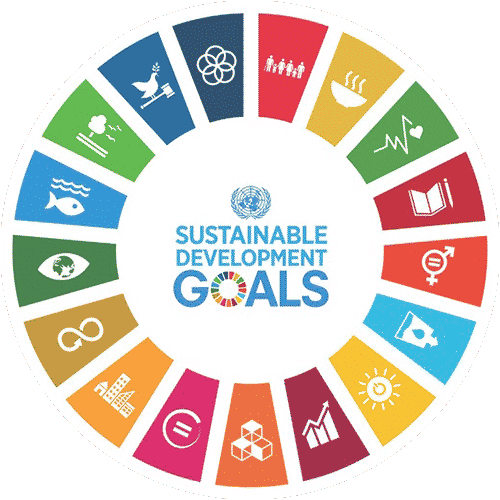
17 goals that improve the world
What you need to know about the SDGs
What you need to know about the SDGs
The SDGs (Sustainable Development Goals) are seventeen goals to make the world a better place by 2030. The SDGs were agreed upon by the countries affiliated with the United Nations (UN), including the Netherlands. The goals were established based on global input from organizations and individuals.
The Sustainable Development Goals were launched in 2015 and run until 2030. They serve as a global compass for challenges such as poverty, education, and the climate crisis. They are the successors to the Millennium Goals, which ran from 2000 to 2015.
Behind the seventeen goals are 169 targets. They make them even more concrete.
Watch the promo video below or visit the national website for more information.
As a volunteer center, we naturally stand fully behind the goals and understand the power of a global compass as a catalyst for improvement. By linking the activities on our platform to these goals, we can quantify the value of volunteering and provide insight into the value of volunteers.
View all options per SDG
Click on the SDG you find most important and contribute directly to that goal!
Click on the SDG you find most important and contribute directly to that goal!















Knowledge session SDGs and volunteering
In this online knowledge session, Deedmob.com welcomes Sandra Pellegrom, National Coordinator for the Sustainable Development Goals at the Ministry of Foreign Affairs, to discuss current developments regarding the SDGs in the Netherlands. Additionally, the session will discuss how to combine SDGs and volunteering to inspire you to implement the SDGs in your daily work.
Question & Answer
Where do the SDGs come from?
The countries of the United Nations (UN) agreed on development goals for the entire world for the first time in 2000. These were the eight Millennium Development Goals, which ran until 2015. The report on those 'MDGs' was predominantly positive . The goal of halving the number of people living in extreme poverty, for example, has been achieved. Other goals, such as reducing maternal and child mortality, were not as successful.
During RIO+20, the UN summit on sustainable development in 2012, the 'Sustainable Development Goals', the successors to the Millennium Goals, were discussed for the first time. At the same time, administrators, citizens, and entrepreneurs in the Netherlands also contributed their thoughts during the Rio aan de Maas meeting.
What is different about these goals?
The SDGs are even more ambitious than the eight Millennium Goals. The new development agenda applies to all countries. It is no longer just about aid from rich countries to poor countries.
The Sustainable Development Goals pay greater attention to peace and security, economic development, and environmental themes. They also go further than the Millennium Goals in completely eradicating poverty and hunger. The idea behind the SDGs is that no one is left behind and that everyone should be able to build a better future.
Moreover, the SDGs were not conceived exclusively within the walls of the UN. Everyone was allowed to have a say. Through the online survey MyWorld , citizens could vote on themes they considered important, something that was not yet technically possible at the time of the Millennium Goals in the year 2000. A UN working group of seventy countries ultimately drew up the list of the seventeen goals that the 193 member states subsequently negotiated.
How are the goals funded?
Countries have agreed that funding for the SDGs must come from the private sector as well as the public sector. Achieving the goals will cost a great deal of money. The World Bank and the IMF speak “ not of billions, but of trillions ”. Estimates range from 2 trillion to 4.5 trillion dollars per year. Yet that is 'only' 4 percent of the global Gross National Product (GNP), the total of all services and products delivered and produced worldwide.
That price is reasonable when you consider what the SDGs can yield. Think of the fight against climate change. The potential costs of damage and loss of biodiversity if we take no action are countless times higher . The same applies to the fight against hunger: if children receive good nutrition during the first years of their lives, they will simply more than earn back that investment later in life. The report Better Business, Better World illustrates exactly how investments in the SDGs give the economy a boost.
Do the goals apply to me?
The SDGs apply to all countries in the world. Of course, the needs in the Netherlands are different from those in some other countries, but there is still much work to be done here as well. Just think of the climate crisis, declining biodiversity, and gender inequality.
Moreover, our actions here also have consequences beyond our borders. Clothing you buy here often comes from countries like Bangladesh or Ethiopia. Or consider the exhaust fumes produced by our cars. These contribute to global warming and lead to drought or increased rainfall in other countries. Through your choices and actions, you can therefore indeed contribute to achieving the SDGs, both here and abroad.
What is already happening in the Netherlands?
Every year, Statistics Netherlands (CBS) measures the Netherlands' progress on the seventeen goals. This results in a mixed report . For instance, the Netherlands lags behind on climate and energy targets and income equality between men and women. However, we do score high on the economic front, the rule of law and institutions, and in some areas of education and health. Various organizations are calling on the government to do more and to use the SDGs as the basis for policy.
Who do we need to achieve the SDGs?
The answer is: everyone. The Sustainable Development Goals are the quintessential tool that connects everyone, from government to business, from civil society to citizen initiatives. View the goals as a shared language towards a sustainable society in 2030. And to achieve them, everyone will have to do their bit.